
Tattoo Aftercare Advice from a Hull Tattoo Artist
You've just sat through your tattoo session, you're buzzing with excitement about your new piece, and now comes the part that most people underestimate: aftercare. As a tattoo artist in Hull, I always make sure my clients leave Seventy Two Street Tattoo with clear aftercare instructions, because how you look after your tattoo in those first few weeks makes a massive difference to how it heals.
Here's everything you need to know about looking after your new tattoo.
The First Few Hours
When you leave the studio, your tattoo will be covered with either second skin (a clear adhesive film) or cling film, depending on what works best for the area tattooed. Each type of covering has different removal times:
Second skin: Remove after a maximum of 5 hours on the first application. If a second piece is applied, it can stay on for up to 2 days
Cling film: Remove after 4 hours
When it's time to remove the covering, always wash your hands thoroughly first. This is the golden rule of tattoo aftercare: clean hands every single time you touch your tattoo.
Daily Cleaning Routine
For the first two weeks, wash your tattoo twice a day, morning and evening. Use lukewarm water and a fragrance-free soap. Gently clean the tattooed area with your fingertips (never a cloth or sponge), rinse thoroughly, and pat dry with a clean paper towel. Don't rub. Patting is key.
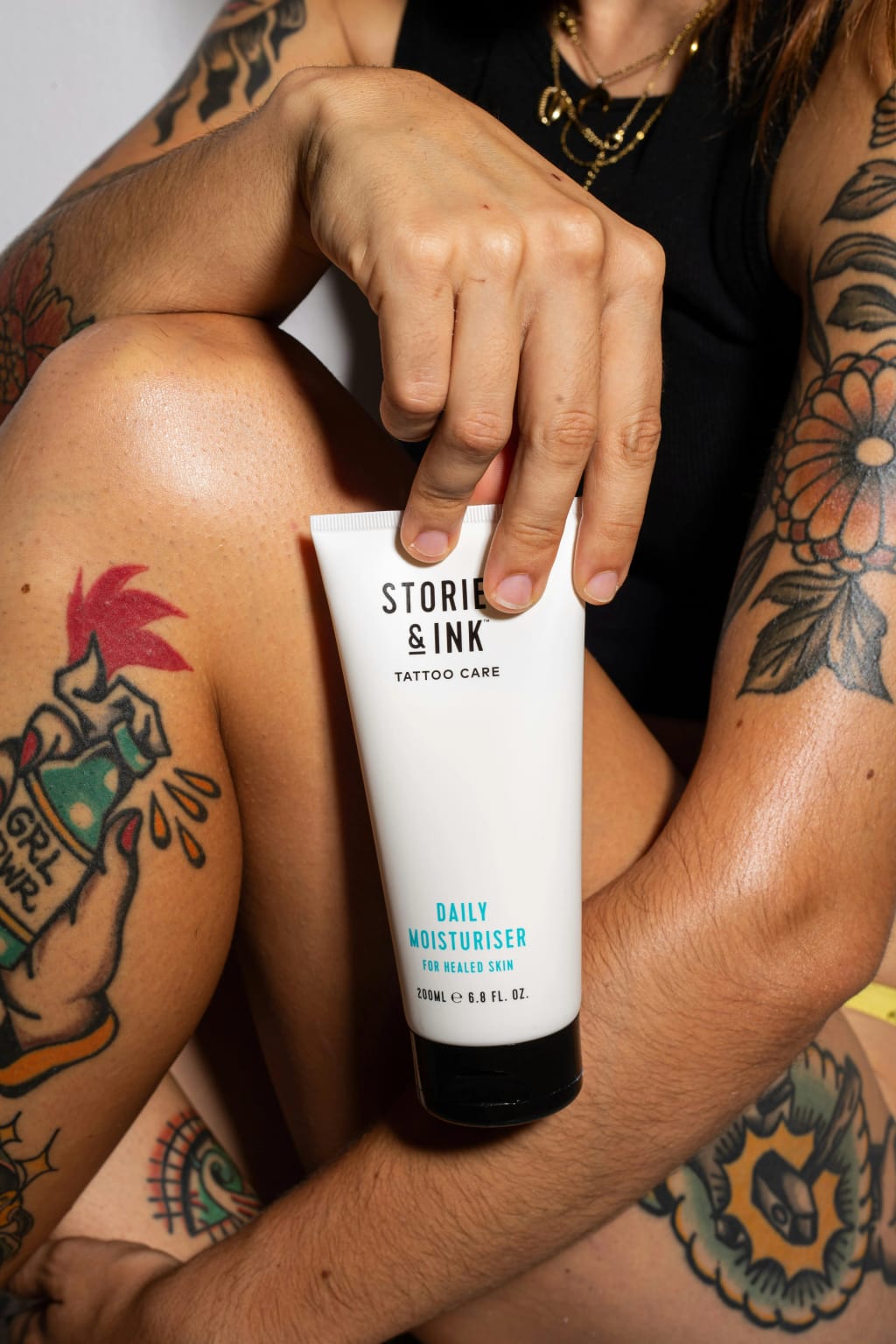
After cleaning, apply a thin layer of fragrance-free moisturiser. I recommend doing this morning and evening only. You don't want to over-moisturise as this can suffocate the skin and slow healing. A little goes a long way.
What to Avoid During Healing
This is where discipline matters. During the healing process (typically 2-4 weeks), you should avoid:
Picking or scratching the tattoo, even when it itches (and it will). Peeling is normal; let it happen naturally
Swimming, baths, and hot tubs. Submerging your tattoo in water can introduce bacteria and cause ink to leach out
Prolonged sun exposure. UV rays are your tattoo's worst enemy during healing. Keep it covered or stay out of direct sunlight
Tight clothing that rubs against the tattoo. Loose, breathable fabrics are best
Gym and heavy exercise for the first few days. Sweat and friction aren't great for a fresh tattoo
The Healing Stages
Understanding what's normal during healing helps reduce anxiety. Here's what to expect:
Days 1-3: Your tattoo may be red, slightly swollen, and tender. This is completely normal. It's essentially an open wound at this stage. Some ink and plasma may seep out.
Days 4-7: The redness subsides and a thin layer of skin begins to form over the tattoo. It may look slightly cloudy or dull. This is normal.
Days 7-14: Peeling and flaking begins. This can be itchy but resist the urge to scratch or pick. The flakes may contain colour, but that's normal and doesn't mean you're losing ink.
Days 14-30: The top layers have healed but deeper layers are still recovering. Continue moisturising and protecting from the sun. Your tattoo may still look slightly milky until it's fully settled.
Long-Term Care
Once your tattoo is fully healed, the best thing you can do for it long-term is protect it from the sun. UV exposure fades tattoos over time, so apply SPF 30+ whenever your tattoo is exposed. Keep your skin moisturised, stay hydrated, and your blackwork will stay bold and crisp for years to come.
When to Get in Touch
If you notice anything unusual during healing like excessive redness, swelling that doesn't go down, pus, or a rash, reach out to me or consult a medical professional. These could be signs of infection, which is rare with proper aftercare but worth knowing about.
I'm always available to answer aftercare questions from my clients in Hull. Drop me a message on Instagram or email and I'll get back to you as quickly as I can. Your tattoo looking its best matters just as much to me as it does to you.